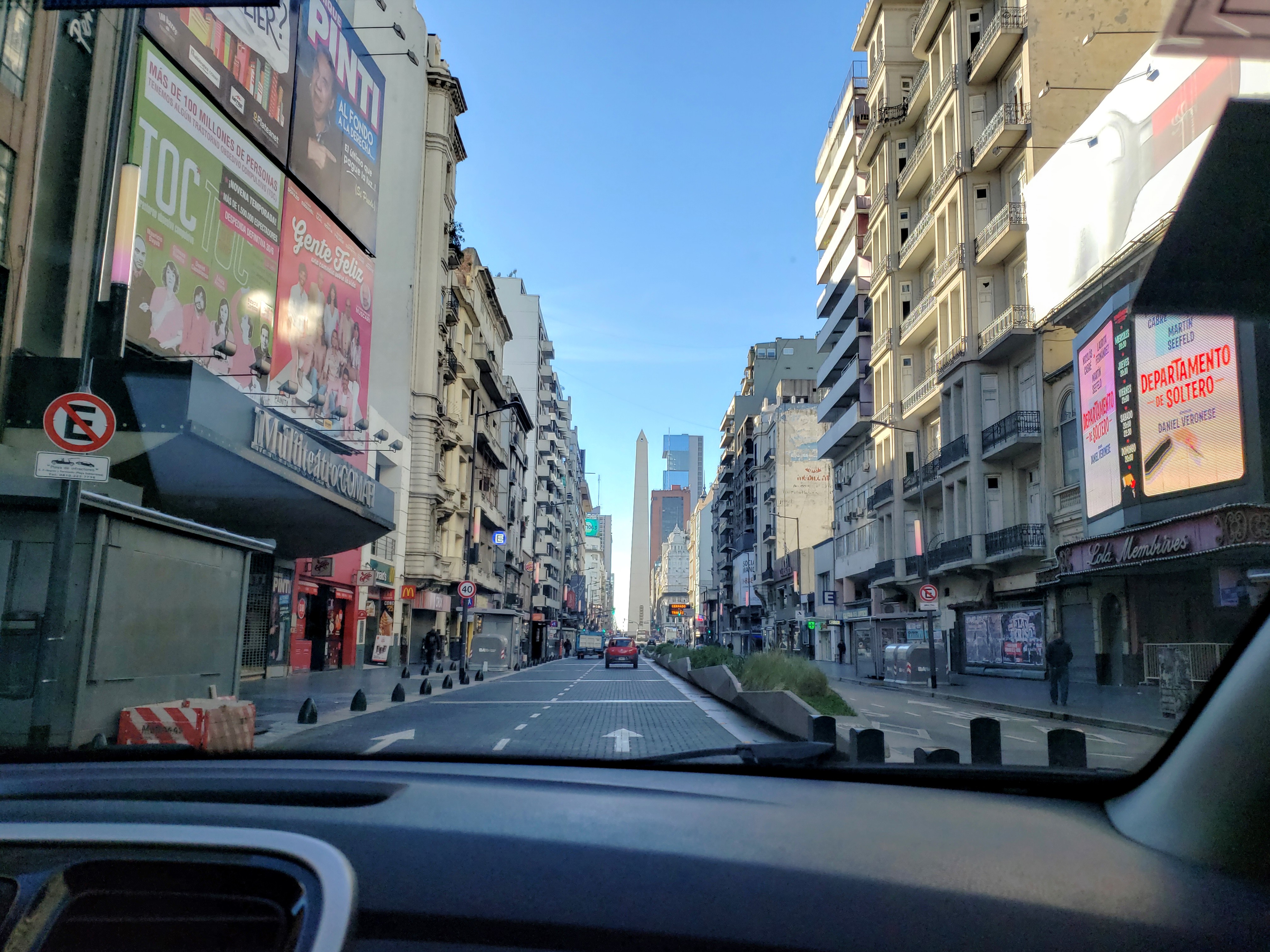

The city of Buenos Aires is one of beauty, and diversity, and an obvious power and strength in the people when faced with adversity. But, there is also traffic, small streets, and tall buildings. When getting around, there is an option of Collectivo which is the name for the many buses weaving through the streets, the Subte which is the subway, and either Uber or Taxi. Although the Subte and Collectivo are great means of transportation, the two of most interest to me are the Ubers and Taxis, and the intense competition between the two.
Often times there are taxis, radio taxis, and remis constantly seen in the traffic of the city. But, less seen but very much present in Buenos Aires is Uber. In the city of Buenos Aires, Uber is illegal but, it is also significantly cheaper and by the public, viewed as safer than taking a cab. Throughout the past month, from observing both Ubers and the three forms of taxis, I found the following.
The competition is so intense, that typically if a Taxi driver learns of an Uber driver, they will take pictures of the driver and the license plate, reporting the information to the police. This is why many Uber drivers will be seen with their phone on the darkest setting and hunched over to keep prying eyes in ignorance. When a person gets into an Uber, they are even asked to sit in the front seat to avoid further suspicion.
From speaking with users of both, many state that Uber is much more convenient, less of a hassle, and they feel significantly safer. One person even reported that they left a phone in an Uber, and it was returned the next day. Whereas, people have described various situations with cabs. For example, one cab pulled over and received payment from another person with a passenger in the backseat. In addition, people have payed the taxi driver, and the driver would switch the bill with a counterfeit bill before handing it back and saying it was not usable.
Uber has done something phenomenal. They have found a way to insert a market in which the legal elements entirely blocked them from doing. And Uber did not just insert the market and take up a fragmented piece, they have begun to replace the Taxi’s. In addition to many customers switching from Taxi to Uber, many Uber drivers have disclosed that they too once drove for Taxi services, but began to realize the profit in Uber. Will the next years lead to changes in infrastructure, or will the legal barriers soon stop all growth by the American International ridesharing company?
 A Business Students Diary