Uber vs. Taxi

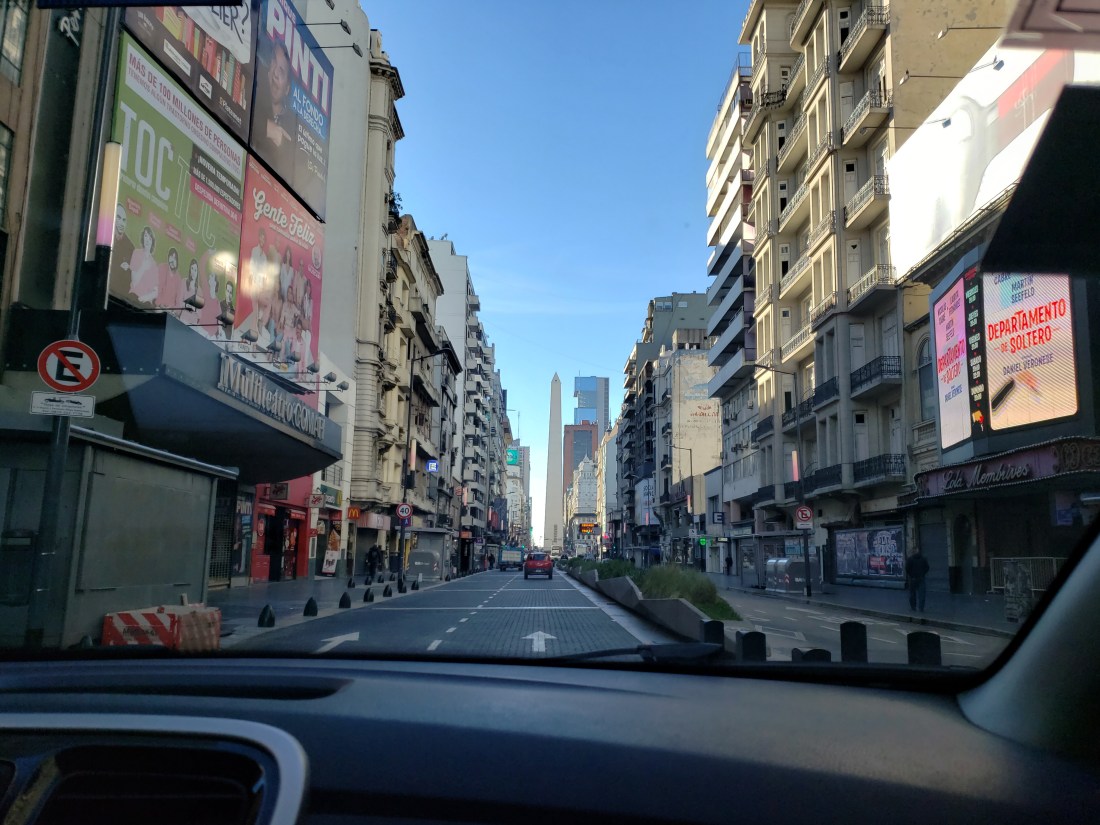
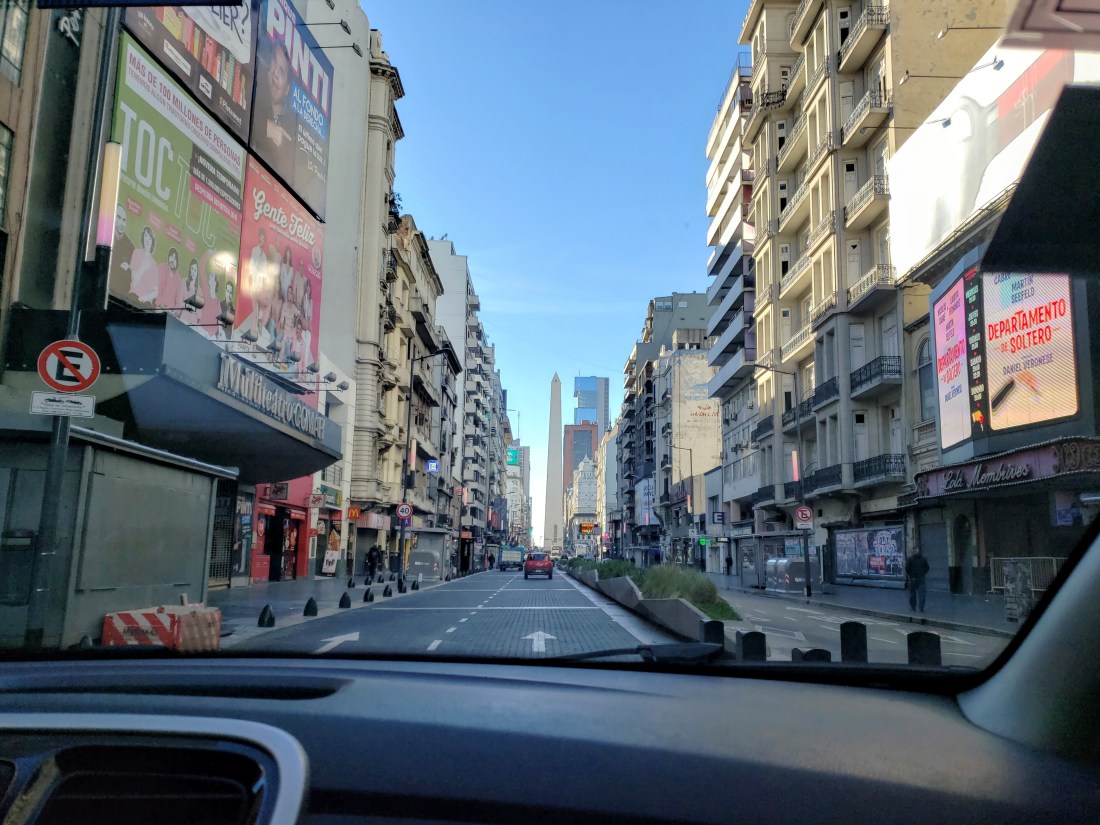
The city of Buenos Aires is one of beauty, and diversity, and an obvious power and strength in the people when faced with adversity. But, there is also traffic, small streets, and tall buildings. When getting around, there is an option of Collectivo which is the name for the many buses weaving through the streets, the Subte which is the subway, and either Uber or Taxi. Although the Subte and Collectivo are great means of transportation, the two of most interest to me are the Ubers and Taxis, and the intense competition between the two.

Often times there are taxis, radio taxis, and remis constantly seen in the traffic of the city. But, less seen but very much present in Buenos Aires is Uber. In the city of Buenos Aires, Uber is illegal but, it is also significantly cheaper and by the public, viewed as safer than taking a cab. Throughout the past month, from observing both Ubers and the three forms of taxis, I found the following.

The competition is so intense, that typically if a Taxi driver learns of an Uber driver, they will take pictures of the driver and the license plate, reporting the information to the police. This is why many Uber drivers will be seen with their phone on the darkest setting and hunched over to keep prying eyes in ignorance. When a person gets into an Uber, they are even asked to sit in the front seat to avoid further suspicion.

From speaking with users of both, many state that Uber is much more convenient, less of a hassle, and they feel significantly safer. One person even reported that they left a phone in an Uber, and it was returned the next day. Whereas, people have described various situations with cabs. For example, one cab pulled over and received payment from another person with a passenger in the backseat. In addition, people have payed the taxi driver, and the driver would switch the bill with a counterfeit bill before handing it back and saying it was not usable.

Uber has done something phenomenal. They have found a way to insert a market in which the legal elements entirely blocked them from doing. And Uber did not just insert the market and take up a fragmented piece, they have begun to replace the Taxi’s. In addition to many customers switching from Taxi to Uber, many Uber drivers have disclosed that they too once drove for Taxi services, but began to realize the profit in Uber. Will the next years lead to changes in infrastructure, or will the legal barriers soon stop all growth by the American International ridesharing company?

Economic Crisis

Yesterday, I visited La Casa Rosada, a large pink painted building that serves as the presidential mansion and executive offices.  In 1873 this building started construction. Now I am in Buenos Aires 146 years later, and have been inspired by the tour of Casa Rosada to take a look at how decisions made inside this building and in the Argentine government affect Business.

Macroeconomic Policies

The Country of Argentina’s reputation for economic instability is not up for dispute in any means.  Currently, there is an inflation rate of 25.7% and an unemployment rate of 8.7%. In addition, Project-Syndicate states that the country recently accepted a $57 billion stand-by loan.  A stand-by loan is when a lender specifies an advanced amount that can be received by the borrower either when demanded or when certain criteria is met. The purpose is to ensure that there is more money available in case of a catastrophe or financial emergency (businessdictionary).  Martin Guzman, author of the Project-Syndicate article writes that, “changing current macroeconomic policies would at least give the country a chance.”

It is also important to mention the economic crisis that began in 2001.  Usually, a financial crisis is the result of the majority of the following conditions: little flexibility in the exchange rate, high current account deficit, high budget deficit, low foreign reserves, high political risk, and high contagion effect.  All of these conditions were being met before the economic crisis.

Government and Business

It is important for Government officials to pay close attention to the economics of the country, and to realize that something must be done to get the country of Argentina back on its feet. Families are seen sleeping on mattresses right outside the capital, and if Kirschner, Macri, Fernandez, and whoever else may sit in power in La Casa Rosada do what is needed for the countries economy the people will not only rise out of poverty. La Ciudad de Buenos Aires could become a flourishing multinational city with wealth and opportunity.

Reflection

In the week before I left the United States to come to Argentina, I was incredibly nervous, I remember packing and repacking five times over. A month seemed as if it would last forever. But now that I have been here for three weeks, it seems as if time has flown by. I wish I could stretch the seconds into days, because nothing in me is ready to return. But instead of spending my time writing this blog saddened about the trip ending, I want to sped this time reminiscing and sharing the amazing experiences I had. However, if I were to share every incredible moment, you would be reading a novel. So instead, below are my three most influential.

Numero 3-El Parque de Memorial: When we first arrived at the memorial, my mind was racing because at the same time we were heading there, my mom was going in for her two year appointment with her lung specialist back in the United States. This was the day we would find out if she was healthy, or if the spot in her lung was malignant and growing. For months previously, there were failed surgeries and scans and more consults than I could count to find out if my mom had lung cancer. We never knew, in the end we were told to wait, and return every 6 months to check for growth for at least two years. This was the last visit, two years had passed.

But as I sat in Argentina, the collectivo I was on seemed to blur past the neighborhoods and the talk by my peers seemed a distant buzz. I couldn’t focus. And when we arrived at El Parque del Memorial, the beginning I was so entangled in my own mind most of the art seemed to only expand my pain and fear. But then I went into an art exhibit, and there were pictures up on the wall in black and white. They were pictures of protesters, pictures of all of the people that fought for their rights. And at the end o fhis hallway, fillied with these black and white photographs, there was a room with a movie playing. It was a showing of the history and the horrific actions done towards the people of Argentina. I must have sat in that room, on the bench in the dark watching that movie play over and over. Something about the music and the people fighting for their rights stopped me, and it brought me perspective.

I knew then whatever happened we would get through, just as the country of Argentina did.

Numero 2-My business meeting: I am so excited to say that I got the opportunity to meet with an alumni from Thunderbird School of Global Management in Argentina. It was an incredibly insightful conversation, during which we talked about the economic crisis in Argentina, the concept of Cooperativas, and more about the lessons he teaches in business. As a professor at the University of Palermo and an entrepreneur and strategist who has lived all around the world, I learned a lot.

Numero 1-The people: No matter how many tours, or trips, or experiences I have had here in Argentina, none of it would have meant anything if not for all of the amazing people I have met along the way. Each person that played a role in my trip and enriched it, and for that I am thankful.

Globalization

A year ago, I started a degree program in Global Management.  A business degree entirely based on the movement towards globalization. And yet, as I opened my laptop to write this blog, nothing came to mind.  So to truly explain what globalization is, I am going to paint a picture for you. You are in another country, the world is spinning because everything seems so completely different and foreign.  The language, the foods, the styles. But then you start to notice, the sign advertising a familiar restaurant from back home. A jacket that you almost bought in your home supermarket hangs off the body that walks by you, the smell of your favorite food drifts from an open door.  This is the result of globalization. A clash of cultures, burgers being sold in a city in South America, Llama jackets for sale in an American Walmart. And this economic phenomenon is one that is steadily present in Argentina.

Argentina’s Role in Globalization

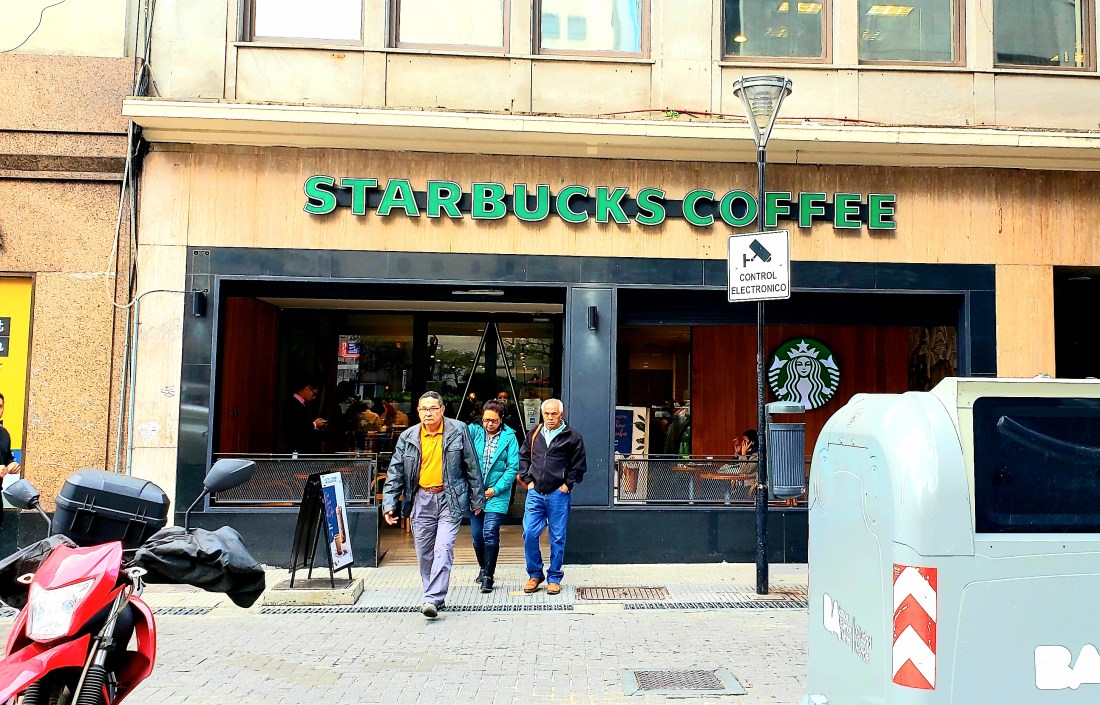
The more technical definition of globalizition is described as when businesses begin having international influence.  In Argentina, I believe major international stores include McDonalds, Shell, and Starbucks. Both Starbucks and McDonalds are frequently found near major food areas, and shells appear to be the most popular gasoline station.

After several weeks of being in Buenos Aires, the effects of globalization are all to prominent and obvious. Panos Mourdoukoutas wrote in forbes that globalization has three sides. The good, the bad and the ugly. All three sides I can see here in Argentina. Some of the good can be seen in the employment opportunities created by new markets, such as new McDonalds, or the opportunity to drive an Uber. On the bad side, the devastating effects of inflation are quite evident in the city. It will not take more than a couple blocks of walking to come across an inhabited mattress pushed to the sidewalk. That is the bad side. The ugly side is when trade wars come as nations desperately try to escape currency devaluations. The ugly side is seen and affects in different ways worldwide. The current U.S. China Trade War is a good example. In Argentina there have been positive affects for the countries trading.

Globalization is here, and it will continue to grow. The important question for people in business in Argentina is if the government can steer the city of Buenos Aires out of a crisis and into an international stage.

Economic Crisis

Yesterday, I visited La Casa Rosada, a large pink painted building that serves as the presidential mansion and executive offices.  In 1873 this building started construction. Now I am in Buenos Aires 146 years later, and have been inspired by the tour of Casa Rosada to take a look at how decisions made inside this building and in the Argentine government affect Business.

Macroeconomic Policies

The Country of Argentina’s reputation for economic instability is not up for dispute in any means.  Currently, there is an inflation rate of 25.7% and an unemployment rate of 8.7%. In addition, Project-Syndicate states that the country recently accepted a $57 billion stand-by loan.  A stand-by loan is when a lender specifies an advanced amount that can be received by the borrower either when demanded or when certain criteria is met. The purpose is to ensure that there is more money available in case of a catastrophe or financial emergency (businessdictionary).  Martin Guzman, author of the Project-Syndicate article writes that, “changing current macroeconomic policies would at least give the country a chance.”

It is also important to mention the economic crisis that began in 2001.  Usually, a financial crisis is the result of the majority of the following conditions: little flexibility in the exchange rate, high current account deficit, high budget deficit, low foreign reserves, high political risk, and high contagion effect.  All of these conditions were being met before the economic crisis.

Corporate Culture

Corporate Culture.  Two words that details entirely how a business works and functions properly.  Thus far into my study abroad, I have done a lot of digging into the economy and the different aspects, yet i have not yet considered how businesses work internally.  This next week I will be researching different companies and searching for answers.

After some observations and conversations, here is what i have found. In the Country of Argentina, the corporate culture is significantly different from that which I am used to in the United States.  There is a major importance placed on personal relationships, which leads to an extremely relationship driven hierarchy. For example, if I were to be the manager of the marketing department, however one of my employees personally knows the manager in the financial department, that employee may be more likely to follow the guidelines given by the financial manager, regardless of the formal structure put in place.  World Business Culture writes that often times the chain of command outlined is not always completely reliant. The complex relationships between employees can hold heavier weight than that of a title.

When it comes to management, three words were given by World Business Culture.  Position, dignity, and personal style. Recently, I had the opportunity to sit and speak with Alejandro Herb, a business man in Argentina.  He mentioned that Argentina is a very informal culture, even in business. Often it is even possible that business owners will be sued by employees for improper practices.  The employees see this as a possibility to make extra cash, while the business is following in societies pattern of unfollowed legal laws.

SPA 201 Primera Tarea

Mas o meno dos semanas pasadas, yo salia Arizona.  Despues de treinta horas, yo llegue en Argentina en la ciudad de Buenos Aires.

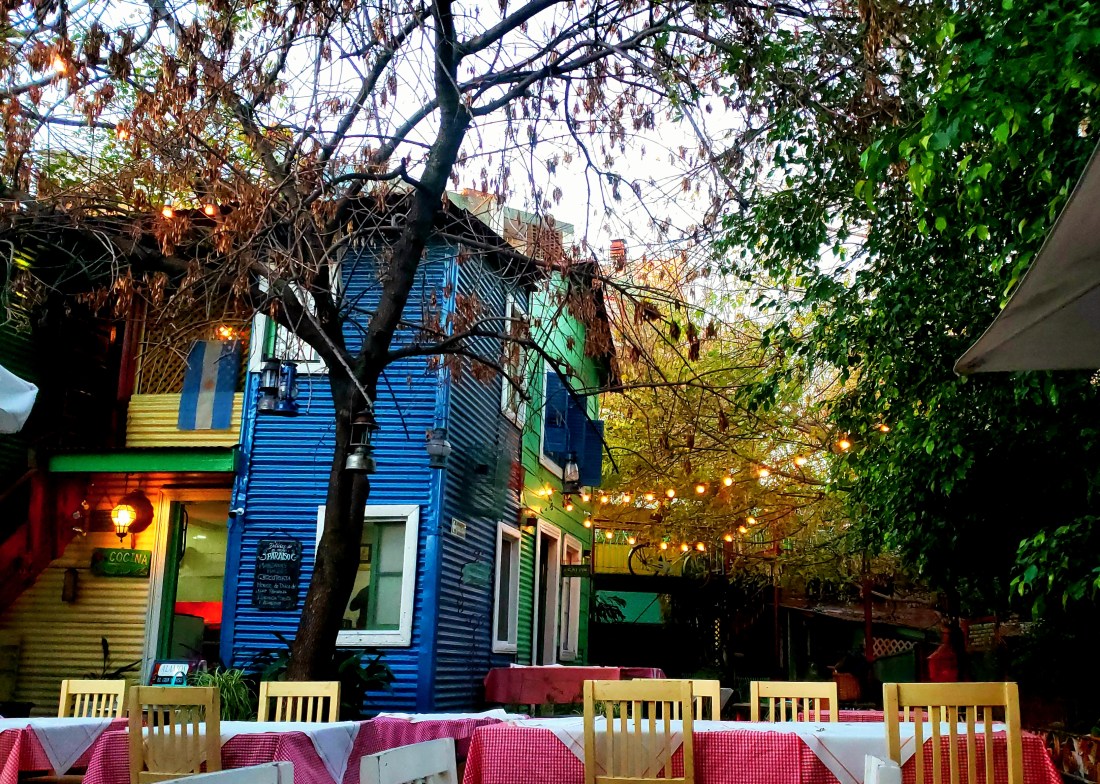
Me gustan las personas de Buenos Aires.  Muchas personas son de todo el mundo y es mi tiempo favorito cuando yo y una persona hablamos.  Me encontre un hombre que esta estudiando medico y una otra hombre que esta estudiando archaelogicia.  Me interesa archaelogicia. Yo y el hablar sobre archaelogicia para mucho tiempo. Una dia, me encontre un hombre desde Peru. Una otra dia, me encontre dos personas desde Venezula.  Cuando fue a la Boca, Yo aprendia que La Boca es una ciudad construida por inmigrantes. y es muy bonita con muchas colores y mercados.

Yo en la boca antes de cena

Usualmente, en la manana, yo me levanta son siete y media.  Pero temprano en la manana, o algunas veces durante de dia, mi dormitorio es tranquilo, como si la ciudad este dormiendo.  Durante de tiempo libre, me gusta leer en mi dormitorio. Algunas veces, yo leyo mis poemas completas de Hugo Palacetti. Otras tiempos, leyo un libro en ingles.  Yo sentaba en mi ventana cuando la ciudad este dormiendo. Es muy tranquila.

Me Gustaria visitar una otra provincia.  Por ejemplo La Provincia de Cordoba. Creo que sera interesante.

Cooperativas

Introduction

There are many types of business models, such as for profit, non profit, or social enterprises.  But a new business model that has shown successful was born in the Country of Argentina. The economic crisis, though most definitely a huge catastrophe, led to pressure being placed on the Argentine business industries.  Under such pressures, such as a diamond, a new business model emerged. Workers seized control, and what is now known as a co-op or in Argentina, Cooperativa, emerged.

Cooperativas

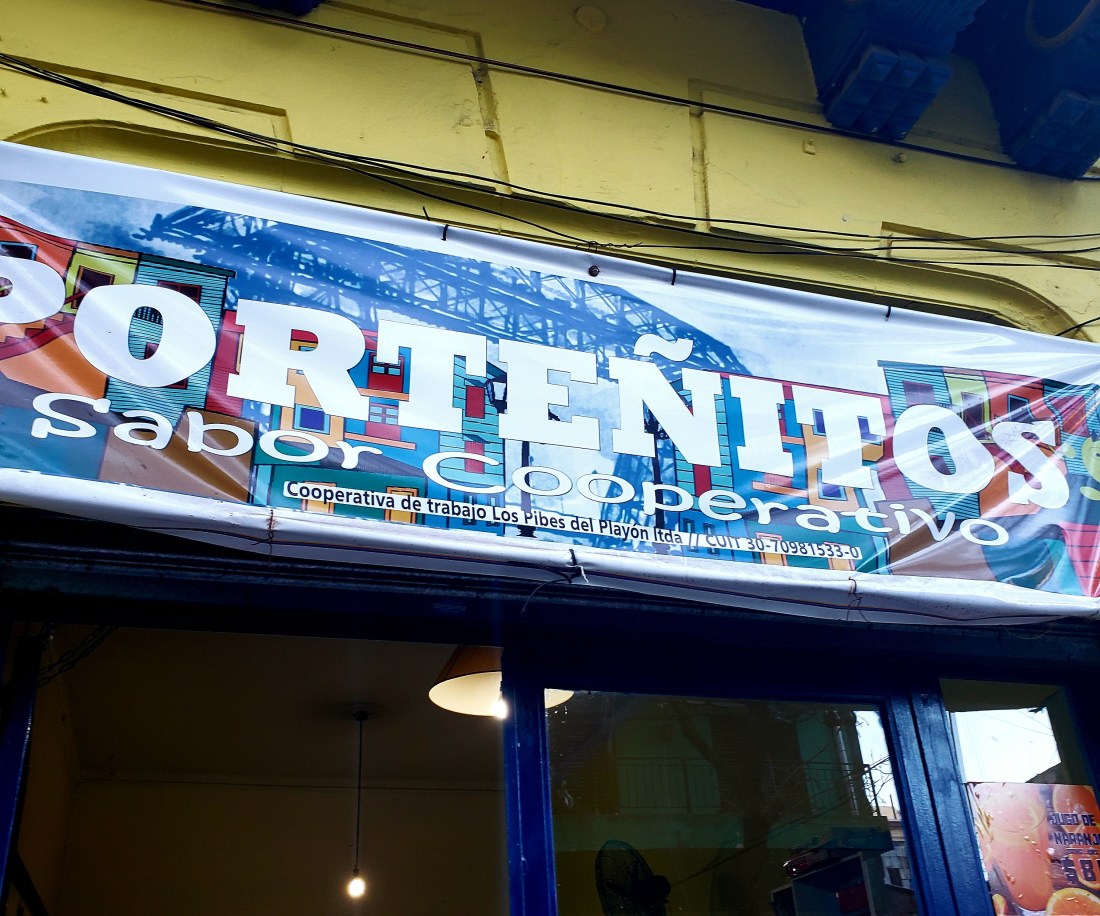
How did Cooperativas come to be?  For one, “Occupy, Resist, Produce” as this was the movements motto as it began.  After the economic crisis, many business owners abandoned their businesses, leaving behind unused factories.  The then unemployed took control of the factories and kept the businesses running. One perfect example of such a business is Portenitos, a cooperativa in La Boca, Argentina that makes delicious chocolate and dulce de leche treats. An employee described the positives by stating that everyone has an equally accountability and desire for the businesses success, as everyone is a partial shareholder.

A study by the University of Buenos Aires reported that as of 2013, 311 “worker-recuperated enterprises” had a current employment of 13,642 workers.

It is now that many are realizing Cooperativas are not just a response to an economic crisis and unemployment, but a possible sustainable business model.